Motor oil treatments can help reduce wear, quiet lifters, and improve fuel economy when used correctly. This guide highlights five widely available options, drawing on reputable brands commonly found on major retailers. Each product is assessed by its core benefits, compatibility, and typical use cases to help American drivers choose the right additive for newer engines, high-mileage vehicles, or diesel and petrol powertrains alike. The following sections provide concise overviews, practical considerations, and a buying guide to compare features side by side.
Summary Of Selected Products
| Product | Brand | Key Benefit | Best For |
|---|---|---|---|
| Heavy Duty Oil Stabilizer | Lucas Oil | Oil stabilization for wear reduction in engines | New engines and heavy-duty usage |
| High Mileage Oil Stabilizer | Lucas Oil | Minimizes wear and reduces noise for aging engines | High-mileage vehicles |
| STP High Mileage Oil Treatment | STP | Anti-wear protection and stop-leak for high-mileage engines | Older vehicles |
| Cera Tec Ceramic Oil Additive | Liqui Moly | Ceramic wear protection and smoother operation | All engines seeking friction reduction |
| Prolube Oil Treatment | Prolube | Reduced wear, noise, and improved fuel economy | Daily drivers and duty vehicles |
Lucas Heavy Duty Oil Stabilizer

Lucas Oil 10001 Heavy Duty Oil Stabilizer is positioned as a 100% petroleum-based additive designed to stabilize oil and protect engine bearings. It aims to reduce friction, extend engine life, and allow smoother running by forming a protective layer within the crankcase. This product is frequently marketed for newer engines as a preventative measure or for fleets subjected to demanding duty cycles. The formulation emphasizes compatibility with conventional motor oils and is commonly used before or during routine oil changes. Users seeking a trusted, widely available stabilizer may consider this option for preventive wear protection.
Lucas High Mileage Oil Stabilizer
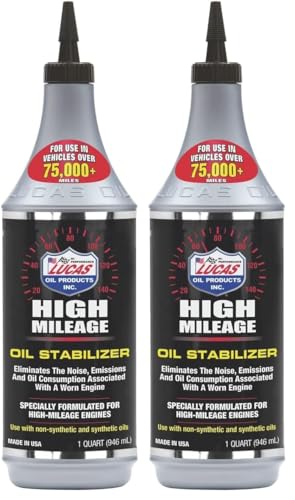
Lucas Oil 10118 High Mileage Oil Stabilizer targets aging engines with higher oil consumption and piston ring wear. The product claims lubrication of internal parts to minimize wear, reduce engine noise, and address emissions concerns associated with worn components. It is often recommended for vehicles with longer service histories or higher mileage, where sealing and wear issues can become more pronounced. As with other stabilizers, users should follow manufacturer guidance and ensure compatibility with their existing oil type.
STP High Mileage Oil Treatment + Stop Leak

STP High Mileage Oil Treatment + Stop Leak is formulated for vehicles with over 75,000 miles. It combines a thick anti-wear film with a stop-leak feature aimed at rejuvenating seals and reducing leaks. The inclusion of ZDDP as an anti-wear agent supports protection against metal-to-metal contact. This option is positioned for extended engine life in high-mileage vehicles and can contribute to reduced smoke and improved overall performance when used with regular oil changes. It is suitable for cars, light trucks, and SUVs seeking both wear protection and leak mitigation.
Liqui Moly Cera Tec Ceramic Oil Additive

Liqui Moly Cera Tec 20002 Ceramic Wear & Tear Protection is designed to provide ceramic-based lubrication for petrol and diesel engines. It is described as mixable with all commercially available motor oils and engineered to remain stable under high thermal and dynamic loads. The additive is presented as reducing friction, preventing deposits, and remaining compatible with standard oil filters. This option may appeal to drivers seeking long-term friction reduction and smoother engine operation across a broad range of temperatures and driving conditions.
STP High Viscosity Oil Treatment

STP High Viscosity Oil Treatment stands out with its zinc-based ZDDP anti-wear agent designed to fight metal-to-metal friction by providing a thicker lubricant cushion. The product emphasizes reduced oil consumption and improved lubrication for moving engine parts, which can benefit engines experiencing wear or operating under heavy loads. It is frequently used during oil changes to supplement the base oil’s protective film and help extend engine life, particularly in older or high-mileage engines.
Rislone XTREME LUBE Engine Treatment

Rislone 4102 XTREME LUBE Maximum Performance Engine Treatment targets broader temperature ranges with a multi-grade formula designed to reduce friction and wear. It emphasizes removal and prevention of sludge, varnish, and other deposits that can affect tolerances and oil flow. By targeting sludge and providing sustained lubrication, the formula seeks to maintain engine efficiency and quiet operation. The product also claims to help keep oil passages clear, improving overall engine cleanliness over time.
Prolube Oil Treatment – 16oz

Prolube Oil Treatment is marketed to improve engine performance by reducing wear, noise, and vibrations while enhancing fuel economy and horsepower. The product is positioned as versatile, suitable for both gasoline and diesel engines, and is noted for extending smooth operation under daily driving or heavy-duty use. It also mentions potential benefits for transmissions and differentials, reflecting a broader approach to lubrication beyond the engine alone. This option may appeal to drivers seeking a single additive with wide applicability and performance claims.
Buying Guide: Key Purchase Considerations
When selecting a motor oil treatment, consider the following factors to align with vehicle needs and maintenance goals:
- Engine type and mileage: Newer engines may benefit from preventive stabilizers, while high-mileage engines might require stop-leak properties or stronger anti-wear protection.
- Oil compatibility: Ensure the additive is compatible with your current oil viscosity and type (conventional, synthetic, or synthetic blend). Mixing issues can occur if not matched correctly.
- Wear protection vs. seal health: ZDDP-based anti-wear agents reduce friction but can affect certain modern catalysts; stop-leak functionalities can help seals but may not be ideal for all engines.
- Temperature and loads: Some formulations are designed for broader temperature ranges or heavy-duty operation; choose based on climate, driving style, and duty cycle.
- Depot and service compatibility: If you rely on dealer maintenance or warranty programs, verify that using an additive complies with any policy requirements.
- Application timing: Most treatments are added during oil changes. Follow product directions for dosage and intervals to avoid over-application.
- Vehicle age and known issues: For vehicles with emissions-related concerns or leaks, a stop-leak option may help, but diagnose root causes if leaks persist.
- Filter compatibility: Ensure the additive neither clogs nor prematurely fills filters; some formulas emphasize filter compatibility to prevent deposits.
Comparative Considerations
For consumers choosing among the listed products, key contrasts include:
- Preventive stabilization vs. high-mileage protection: Heavy-duty stabilizers emphasize wear reduction for newer engines, while high-mileage variants target aging engines and seals.
- Ceramic vs. conventional formulations: Ceramic-based additives aim for lower friction and smoother operation, potentially providing longer-term friction reduction at a higher upfront cost.
- Leak sealing and sludge control: Some products emphasize stop-leak and sludge removal, which can be advantageous for vehicles with minor leaks or sludge buildup.
Overall, selecting a motor oil treatment should be guided by engine age, mileage, climate, and maintenance goals. Use the product that best aligns with your vehicle’s operating conditions and consult your owner’s manual or a trusted mechanic if you have doubts about compatibility or warranty considerations.