Engine block leaks can threaten cooling efficiency and overall reliability. This guide highlights select, proven stop-leak products designed to seal leaks in radiators, blocks, head gaskets, and related cooling components. The focus is on permanent or long-lasting cures that work with various antifreeze formulations and without extensive system draining. Read on to compare popular blends, usage considerations, and how to choose the right product for your vehicle’s cooling system.
| Product | Brand | Type | Notes |
|---|---|---|---|
| Bar’s Leaks 1109 Liquid Copper Block Seal | Bar’s Leaks | Block Sealant | Intake, radiator; antifreeze compatible |
| Bar’s Leaks HG-1 Head Seal | Bar’s Leaks | Head Gasket Repair | Repairs blown head/intake gasket leaks |
| K&W 401016 Block Seal Permanent Metallic | CRC | Block/Radiator Seal | Seals cast iron/aluminum blocks and radiators |
| BlueDevil Radiator & Block Sealer | BlueDevil | Block/Radiator Sealer | Permanent repair; no solids |
| Bar’s Leaks 1100 Head Gasket Repair | Bar’s Leaks | Head Gasket Repair | Stops block leaks; seals cracked heads |
Below are five options chosen for broad compatibility with American vehicles, including gas and diesel engines. Each product section provides a concise overview, key features, and practical notes for use with engine blocks and cooling systems.
Bar’s Leaks 1109 Liquid Copper Block Seal

Bar’s Leaks 1109 Liquid Copper Block Seal provides a one-step, copper-infused solution designed to permanently fix coolant leaks in cooling systems. The formula is antifreeze-compatible and works without draining the system, sealing leaks in plastics, aluminum, and cast iron components including heads, blocks, intake manifolds, gaskets, freeze plugs, heater cores, and radiators. The product uses fiber additives to form a solid seal and is suitable for cars, trucks, SUVs, vans, and RVs when used as directed.
Bar’s Leaks HG-1 Head Seal Blown Head Gasket Repair

HG-1 Head Seal is designed to seal blown head and intake gasket leaks and to seal warped or cracked heads and blocks under certain driving conditions. It is antifreeze compatible and requires no flushing for most coolant mixes. The formula supports various silicate-based and non-silicate antifreezes and works without draining the cooling system, provided the engine can reach operating temperatures and idle for a short period without overheating.
K&W 401016 Block Seal Permanent Metallic
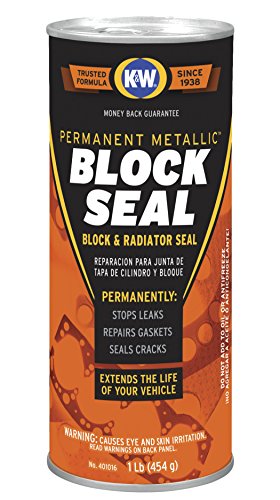
K&W 401016 offers a permanent metallic seal capable of repairing cracks and holes in cast iron and aluminum engine blocks, head gaskets, freeze plugs, and radiators or heater cores. It is suitable for all water-cooled diesel and gasoline vehicles. The product emphasizes a robust, steel-like seal that resists leaks even under normal driving conditions, and it is designed to work with a broad range of antifreeze formulations.
BlueDevil Radiator & Block Sealer

BlueDevil’s 16-ounce Radiator & Block Sealer delivers a permanent repair for leaks in radiators and engine blocks. It works on plastic, aluminum, and metal radiators and contains no solid particulates to clog the cooling system. The formula is designed for easy use and compatibility with a wide range of cooling system configurations, reducing the need for system flushing and disassembly.
Bar’s Leaks 1100 Head Gasket Repair
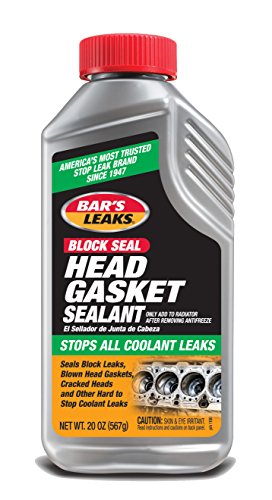
Bar’s Leaks 1100 Head Gasket Repair stops leaks associated with block and head gasket failures and cracked cylinder heads or blocks. It is intended to provide a durable seal that helps seal leaks without major disassembly. The product is formulated to work with standard automotive cooling systems and is compatible with most 50-50 antifreeze mixes, making it a practical option for many vehicles facing head gasket-related leaks.
Buying Guide: Key Purchase Considerations
- Type of leak: Identify whether leaks are in the head gasket, block, radiator, heater core, or a combination. Some products are designed specifically for head gasket leaks, while others target block or radiator seals.
- Material compatibility: Check antifreeze compatibility and the materials involved (plastic, aluminum, cast iron). Incompatibilities can cause corrosion or reduced sealing performance.
- Ease of use: Most products advertise no draining or flushing, but verify if your cooling system requires any pre-steps or engine cooling time before application.
- Long-term durability: Consider whether the product promises a permanent seal or a temporary fix, and weigh the potential need for follow-up maintenance or professional inspection.
- Vehicle type and engine: Confirm the product supports your engine type (gasoline vs. diesel) and the intensity of the leak. Heavy-duty applications may require higher-capacity formulas.
- System condition: If the cooling system has multiple issues (corrosion, clogged passages, aging hoses), a sealant may be a temporary measure while planning a more comprehensive repair.
- Safety and warranty: Review any safety cautions, potential clogging risks, and the manufacturer’s warranty or guarantee for the sealant.
- Application steps: Follow the product’s shake-and-pour or pour-and-go instructions, and ensure the engine reaches normal operating temperatures for the seal to form properly.
Comparative Perspectives
Permanent metallic seals generally offer robust performance for cracked blocks or head gasket leaks but require careful matching to the engine material. Copper- or fiber-based formulas are often versatile and easier to apply, yet some older engines may respond differently due to cooling system design. Radiator-focused sealers tend to be most effective where leaks are in cooling passages or radiators, while head-gasket-specific products can address gasket-related leaks with targeted sealing power.
Practical Usage Tips
Before using any sealant, ensure the vehicle is cool and that you follow the product’s instructions precisely. Check the coolant type and compatibility with antifreeze concentrates. After application, monitor the temperature gauge and perform a slow test drive to allow sealing agents to circulate and seal the leak. If leaks persist after the recommended time, consult a professional mechanic, as continued coolant loss can indicate a more serious condition or an improper seal.