RFID cards provide a simple, effective way to manage who can access your home EV charging station. This guide highlights five RFID-focused options, including dedicated RFID blocking cards, replacement access cards, and RFID-enabled chargers. Each option offers a different balance of security and everyday convenience, helping you guard against unauthorized charging and data skimming while keeping the charging routine straightforward. Use the summary table to compare at a glance, then dive into detailed product sections to find the best fit for your setup.
| Product | Brand | Type | Key Benefit |
|---|---|---|---|
| Autel RFID Blocking Cards 2 Pack Ev Charger | Autel | RFID Blocking Cards | Lightweight, wallet-friendly, 2-pack |
| Leviton RFID Access Card, ERFID | Leviton | Access Control Card | Activates RFID access for Leviton EV Series |
| Cardian RFID Blocking Cards Set 3 | CARDIAN | RFID Blocking Cards | Slim, discreet 5cm shield |
| SaiTech IT RFID Blocking Card 5 Pack | SaiTech IT | RFID Blocking Cards | 2.4” working distance; multi-pack |
| EVCUBNB RFID Card Enabled Charger | EVCUBNB | RFID Card Included | RFID option with Level 2 charger |
Autel RFID Blocking Cards 2 Pack

Autel markets RFID Blocking Cards as a lightweight, portable way to shield RFID-enabled charging environments. The 2-pack is designed for quick, on-the-go protection, fitting easily into wallets or pockets. These cards are positioned for use with AUTEL EV chargers, offering passive RFID shielding that helps prevent unauthorized reads during charging. With no batteries or power requirements, the cards provide a maintenance-free option for everyday use. Their compact form supports travelers and multi-device households who want a discreet layer of privacy without altering charging routines.
Leviton RFID Card for EV Charging
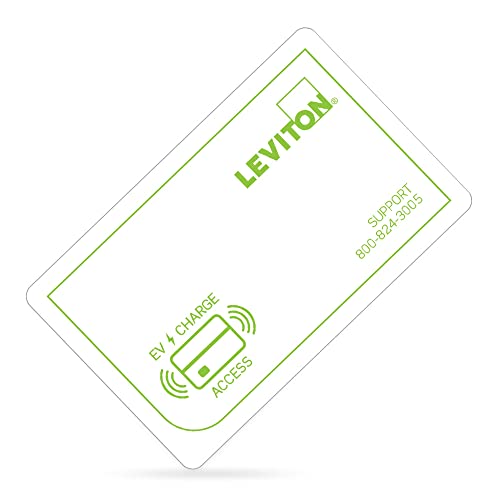
Leviton offers an RFID Card designed for its EV Series stations. This replacement or additional card supports access control when enabled on compatible Leviton units. Many Leviton stations ship with access control disabled, allowing you to activate RFID-based access by tapping the ADMIN card that comes with the station. If you want to limit charging to approved users, adding or replacing RFID cards provides a straightforward solution. Each EV Series station (EV320, EV32W, EV480, EV48W) typically includes two RFID cards, simplifying setup for households with multiple users.
Cardian RFID Blocking Cards Set 3

Cardian’s Set of three RFID Blocking Cards emphasizes compact, discreet protection. The cards are about 1.1 millimeters thick, allowing them to slip into a wallet without bulk. Cardian promotes a five-centimeter protective barrier designed to deter hidden scanning devices and prevent data skimming from RFID-enabled cards. The set is positioned as a reliable everyday shield for debit cards, IDs, and travel documents, while remaining compatible with most RFID/NFC readers found in retail, transit, or charging environments. The absence of power requirements adds to its low-maintenance appeal.
SaiTech IT RFID Blocking Card 5 Pack

SaiTech IT’s five-pack focuses on preventing e-pickpocketing across an entire wallet. Each card is designed to block RFID and NFC signals, creating a barrier against unauthorized reads. A notable feature is the 2.4-inch effective working distance, which helps ensure broad coverage for standard wallets. The design relies on a passive shielding approach without batteries, offering a practical, economical solution for protecting multiple cards—credit, debit, IDs, and transit passes—within a single purchase. The cards are marketed as compatible with a wide range of RFID readers encountered daily.
EVCUBNB RFID Card Enabled Charger

The EVCUBNB Level 2 EV Charger combines robust charging performance with RFID authentication. This 50-amp station delivers up to 12 kW of power and comes with a 25-foot cable, suitable for indoor or outdoor use. It supports a standard NEMA 14-50 plug or a hardwired connection. The charger includes RFID card authentication, enabling authorized users to start charging with a simple tap. The unit emphasizes safety and reliability, featuring UL-listed components and weather-resistant housing. Its smart features also include optional Wi-Fi/app connectivity for scheduling and monitoring alongside RFID access.
Buying Guide
RFID Blocking vs RFID Access Cards
- RFID blocking cards provide a shield that prevents unauthorized reads. They are ideal for protecting a broad range of cards in your wallet when near a charger or reader.
- RFID access cards grant controlled entry to specific charging stations. They are best when you want to limit usage to designated users while maintaining convenience.
- Consider your charging environment: home-only setups may benefit most from blocking cards for privacy, while multi-user households may require access cards for controlled access.
Charging Station Compatibility
- Check whether your charging station supports RFID-based access and how many cards are required or provided with the unit.
- When purchasing, verify compatibility with your charger brand (e.g., Leviton, AUTEL) to ensure seamless integration and activation.
- Some chargers include cards by default; replacement or additional cards may have licensing or activation steps.
Security and Privacy Considerations
- Blocking cards reduce exposure to skimmed data but do not replace strong overall wallet security or device hygiene.
- Access-control cards should be managed carefully; lost cards may require deactivation and reissue to prevent unauthorized charging.
- Consider combining RFID protections with strong charger passwords or app-based controls for layered security.
Ease of Use and Portability
- Blocking cards are extremely portable and require no setup—just carry it with you.
- Access cards require synchronizing with the charger or admin controls; plan for multi-user households where multiple cards are needed.
- Charger-integrated RFID options offer streamlined operation but depend on power availability and network connectivity for full features.
Cost, Durability, and Warranty
- Blocking cards are typically low-cost, highly durable, and battery-free, offering long-term value.
- Access cards price and renewal depend on the charger ecosystem and replacement policies—check for card replacement costs or admin features.
- Durability matters for outdoor setups; choose weatherproof housings and robust connectors to minimize maintenance.
Versatility and Future-Proofing
- If you anticipate changing charging needs (more users, multiple charging stations), consider a mix of blocking cards for privacy and access cards for controlled access.
- Look for chargers with software updates and compatibility with popular RFID standards to avoid obsolescence.