Finding the best portable generator for RV trips is essential for reliable, quiet, and efficient power on the road. This article reviews top-rated generator options great for recreational vehicles, highlighting dual-fuel capabilities, quiet operation, and smart features like CO monitoring. Below is a comparison table of selected models to help you quickly identify key specs and benefits.
| Product Name | Power Output | Fuel Type | Special Features |
|---|---|---|---|
| WEN Quiet Dual Fuel Inverter Generator (DF360iX) | 3600 surge / 2900 rated Watts (Gas) | Gasoline & Propane | CO Watchdog, Ultra-quiet |
| DuroMax XP13000EH Dual Fuel Generator | 13,000 Watts | Gasoline & Propane | Whole Home Backup, Transfer Switch Ready |
| Westinghouse 4650 Peak Watt Generator | 4650 Peak / 3600 Running Watts | Gasoline | RV Ready 30A Outlet, Long Run Time |
| WEN Quiet 6800-Watt Dual Fuel Generator (DF680iX) | 6800 surge / 5100 rated Watts (Gas) | Gasoline & Propane | Level 2 EV Charging, CO Watchdog |
| Jackery Explorer 1000 v2 Portable Power Station | 1500W AC Output | Battery (Solar Optional) | Fast Charge, Lightweight, Quiet |
WEN Quiet and Lightweight 3600-Watt Dual Fuel RV-Ready Portable Inverter Generator

This dual-fuel portable inverter generator runs on gasoline or propane, delivering 3600 surge watts and 2900 running watts on gas, with slightly lower output on propane. It’s noted for extremely quiet operation, rivaling a normal conversation. The clean power output protects sensitive electronics like smartphones and laptops, making it perfect for RVers who need reliable and quiet energy without noise disruption. The built-in fuel shutoff adds convenience and safety during storage or transportation.
DuroMax XP13000EH 13,000-Watt Dual Fuel Portable Generator

With a massive 13,000 watts, the DuroMax XP13000EH powers your entire RV or even your home during outages. It runs on gasoline or propane, designed with a robust engine ensuring durability and consistent output. Ideal for those who need whole-home backup power alongside RV usage. It is transfer switch ready for emergency preparedness. While larger and heavier, its power capacity makes it suited for bigger RVs or prolonged power needs.
Westinghouse 4650 Peak Watt Portable Generator, RV Ready 30A Outlet
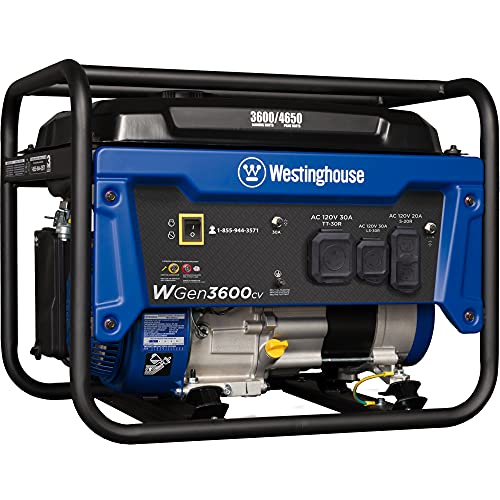
This 4,650 peak watt generator features a 4-gallon fuel tank that can run up to 14 hours on a single fill, perfect for extended RV trips. It offers multiple outlets including a dedicated 30 Amp RV-ready outlet and household receptacles, plus protective rubber covers. Safety is enhanced with a fuel gauge to monitor consumption. Its recoil start is straightforward for ease of use. It provides a good balance between power output and portability.
WEN Quiet 6800-Watt Dual Fuel RV-Ready Electric Start Portable Inverter Generator

This powerful inverter generator features 6800 surge watts on gasoline and 6000 watts on propane, with electric start for convenience. It includes bonded-neutral 240V output providing Level 2 EV charging, making it suitable for charging electric vehicles. The built-in CO watchdog sensor adds lifesaving protection by shutting down the generator if carbon monoxide levels rise, enhancing safety during RV camping. Ideal for users who want strong performance paired with advanced technology and quiet operation.
Jackery Explorer 1000 v2 Portable Power Station, Solar Generator for RV

The Jackery Explorer 1000 V2 offers 1500W AC output powered by a large lithium iron phosphate battery, ideal for RVers seeking clean, silent power without fuel. Its lightweight design and one-hour fast charging capability make it unmatched in portability and convenience. Optional solar panels enable off-grid charging. It’s perfect for those prioritizing eco-friendly, noiseless operation with reliable power for small to medium appliances and electronics.
Buying Guide: Key Considerations for RV Portable Generators
Selecting the right portable generator for your RV involves evaluating several important factors to match your needs and preferences:
- Power Output: Calculate watt requirements for your RV appliances, considering surge wattage for devices with high startup power (like A/C units). Portable inverter models typically range from 2000 to 6000 rated watts; larger dual-fuel generators offer much higher outputs suitable for whole-home coverage.
- Fuel Type: Options include gasoline, propane, dual-fuel, or battery-powered. Dual-fuel units provide flexibility and extended runtime, while battery stations offer silent, emission-free operation but with limited capacity and recharge time.
- Noise Level: Quiet operation is crucial for campground courtesy and personal comfort. Inverter generators generally produce less noise, often around 50-60 dBA, compared to conventional gas generators which can be louder.
- Portability and Weight: Consider portability if you frequently move your generator. Lightweight models with handles simplify handling, especially important for solo travelers or smaller RVs.
- Safety Features: Generators with CO detectors and automatic shutoff systems are vital for enclosed or partially enclosed spaces to prevent carbon monoxide poisoning.
- Outlets and Compatibility: Check for RV-ready 30A or 50A outlets and USB ports for electronics. Multiple outlet types increase versatility.
- Run Time and Fuel Efficiency: Longer run times per tank reduce refueling stops, which is convenient for extended trips. Economy or eco modes enhance fuel efficiency.
- Starting Method: Electric start generators provide convenience, reducing physical effort compared to recoil starts.
- Additional Features: Consider built-in fuel shutoff, parallel capability (to connect multiple units), and durable construction for harsh outdoor use.
Assess your typical RV power usage and camping duration to choose a model balancing power, portability, noise, and convenience for the best overall experience.