Finding the right marine radio antenna can dramatically improve range, clarity, and reliability when you’re out on the water. The following selections emphasize durability, frequency coverage, and ease of installation, helping boaters, anglers, and sailors stay connected across VHF bands. Each option below is suitable for common 156-163 MHz marine radios, while a few also cover broader ranges for multi-band use.
| Product | Frequency Range | Gain | Cable Type | |
|---|---|---|---|---|
| Long Range VHF Marine Antenna (eifagur) | 156-163 MHz | 2.5 dBi | 5m RG-58 with PL259 | Mast-top mounting |
| VHF Marine Base Antenna (UAYESOK) | 156-163 MHz | 3 dBi | 7 m RG-58U | Fixed mount with ratchet |
| Boat Marine Vehicle Antenna (BINGFU) | 136-174 MHz, 400-520 MHz | — | 3 m RG58/U | Magnetic base |
| Tram 1604 39″ Marine Antenna | AIS & All VHF bands | 2.5 dBd | 15 ft RG-58A/U | Stainless steel whip with base |
| Tram VHF Marine Antenna with L Bracket | All marine bands | 6 dB | 15 ft RG58A/U | Heavy stainless L-bracket |
The products above span compact to long-range solutions and offer varied mounting options—from mast-top and fixed mounts to magnetic bases and heavy-duty brackets. They are suitable for different vessel sizes and installation preferences, whether you need AIS-capable coverage, broader VHF bands, or rugged construction for offshore trips.
Long Range VHF Marine Antenna (eifagur)

The eifagur Long Range VHF Marine Antenna is designed for 156-163 MHz operation with a 2.5 dBi gain and a 50-ohm impedance. It supports up to 50W and features a durable stainless steel bracket for mast-top installations. The included 5-meter low-loss RG-58 cable with a PL259 connector improves usability by minimizing signal loss during transmission and reception. This antenna is specifically tuned for the 156-163 MHz range, making it suitable for most standard marine VHF radios on boats across the American coastline.
VHF Marine Base Antenna 48 Inch (UAYESOK)
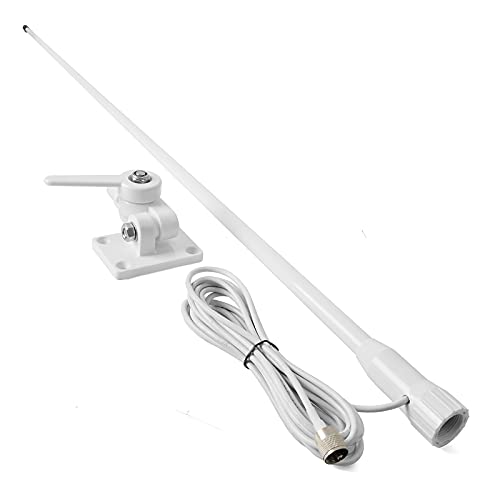
The UAYESOK 48-inch VHF marine base antenna uses fiberglass construction for durability in harsh marine conditions. It covers 156-163 MHz with a nominal 1.5:1 VSWR at 159.5 MHz and delivers about 3 dBi of gain. The 7-meter low-loss RG-58U cable reduces signal degradation, and the anti-corrosion materials ensure longevity in saltwater environments. Its ratchet-style fixed-mount setup provides straightforward installation on a rail, bulkhead, or other stable point on the vessel.
Magnetic Base Antenna for Marine Use (BINGFU)

The BINGFU magnetic base antenna is designed for multi-band use, spanning VHF 136-174 MHz and UHF 400-520 MHz. It comes with 3 meters of RG58/U cable and a UHF PL259 male connector, plus an SMA female adapter for flexible compatibility with many radio models. Its compact 47 cm height and light 280 g weight make it ideal for smaller boats or as a mobile, quick-attach antenna. Compatibility extends to many popular marine VHF radios and handheld transceivers across brands.
Tram 1604 39″ Marine Antenna

The Tram 1604 39″ antenna provides comprehensive AIS and VHF marine band coverage with a 2.5 dBd gain. A premium base loading coil and triple-chrome-plated brass base ensure durability in marine conditions. A 15-foot RG-58A/U coaxial cable supports flexible installations, while the stainless steel whip and mounting bracket contribute to long-term reliability on deck or above the cabin. This antenna aims to balance performance with robust build quality for demanding environments.
Tram VHF Marine Antenna with L Bracket

This Tram model brings full marine-band coverage with a heavy-duty stainless steel L-bracket for versatile mounting options, including side or mast placement. It offers a solid 6 dB gain and comes with a 15-foot low-loss RG58A/U coax and PL-259 connector. The combination of strong gain and robust mounting hardware makes it a practical choice for boats that require reliable communication across all marine frequencies while maintaining a secure installation.
Buying Guide: Key Purchase Considerations for Marine Antennas
- Frequency coverage: Identify whether you need single-band 156-163 MHz for standard VHF use or multi-band capabilities (VHF/UHF) for broader communication and flexibility in various regions.
- Gain and impedance: Higher gain can improve reception in challenging conditions, but ensure the impedance matches your radio (commonly 50 ohms). Balance gain with mounting location and vessel size.
- Mounting method: Choose based on your vessel layout. Mast-top antennas offer height for better range, while magnetic bases and L-brackets provide easier, portable installs. Fixed mounts are best for stability on larger boats.
- Cable length and quality: Longer cables can introduce signal loss. Prefer low-loss RG-58 variants and ensure connectors (PL-259, SMA) match your radio setup.
- Durability and materials: Saltwater exposure demands corrosion-resistant materials, such as stainless steel hardware and fiberglass or reinforced housings. UV resistance is a bonus for exterior use.
- AIS and multi-band coverage: If AIS is important for navigation and collision avoidance, consider antennas designed to cover AIS frequencies and adjacent VHF bands.
- Installation effort: Some antennas require more complex mounting (mast top, base loading coils) while others are quick to install with magnetic bases—assess your comfort with DIY installation.
- Interference and mounting location: Avoid placing antennas near other electronics or metal structures that can cause multipath or RF interference. A clear line of sight improves performance.
- Maintenance: Look for rugged construction and easy maintenance, with components designed for marine environments and straightforward cable replacements if needed.
When choosing, compare how each option aligns with your vessel size, typical cruising area, and preferred installation style. The right antenna can extend your radio’s effective range, reduce static, and improve overall clarity in both voice communications and safety-related transmissions.