Fuel system cleaners help maintain peak engine performance by removing deposits, stabilizing fuel, and protecting critical components from ethanol and water-related corrosion. For gas engines, choosing the right cleaner can reduce rough idle, improve throttle response, and extend the life of injectors, carburetors, and intake valves. The following picks focus on widely available products that support modern gasoline systems—from direct-injection to traditional carbureted engines—while addressing common concerns like varnish buildup and ethanol-related fuel degradation. This guide highlights five top options with strong track records for everyday American vehicles and hobbyist machines alike.
| Product | Brand | Size | Key Benefit |
|---|---|---|---|
| Gumout Multi-System Tune-Up | Gumout | 16 oz | Cleans GDI injectors and carburetors; stabilizes fuel; combats ethanol-related deposits |
| STP Ultra 5 In 1 | STP | 12 Fl Oz | Deep cleaner with PEA/PIBA detergents; reduces friction and deposits |
| Red Line SI-1 Complete | Red Line | 15 Ounce | Cleans injectors, valves and chambers; protects against corrosion |
| Chevron Techron Concentrate Plus | Chevron | 20 oz | Reduces rough idle and hesitation; broad fuel-system cleaning |
| Chevron Techron High Mileage | Chevron | 12 oz | Restores power and fuel economy; protects aging fuel systems |
Gumout Multi-System Tune-Up Cleaner

Gumout’s Multi-System Tune-Up is positioned as a versatile fuel treatment designed to revitalize engines that depend on gasoline, including GDI injectors and carburetors. The product claim emphasizes cleaning capability across multiple components, offering an integrated approach to fuel system maintenance. It markets itself as a comprehensive solution that not only cleans but also prevents carbon buildup, which can negatively affect performance over time. The formulation aims to work with various engines—gas, diesel, or ethanol blends—and can help combat ethanol-related corrosion while stabilizing fuel to support engine life and emissions control.
In practice, the cleaner targets a broad range of potential problem areas, aiming to restore smooth acceleration, reduce hesitation, and improve overall efficiency. The emphasis on “full fuel system cleaner” underscores a holistic cleaning action rather than a single-issue additive. Users with modern vehicles or older engines experiencing deposit-related symptoms may find this product a convenient one-step option that supports both performance and fuel stability, while also offering protective benefits against future buildup.
STP Ultra 5 In 1 Fuel System Cleaner
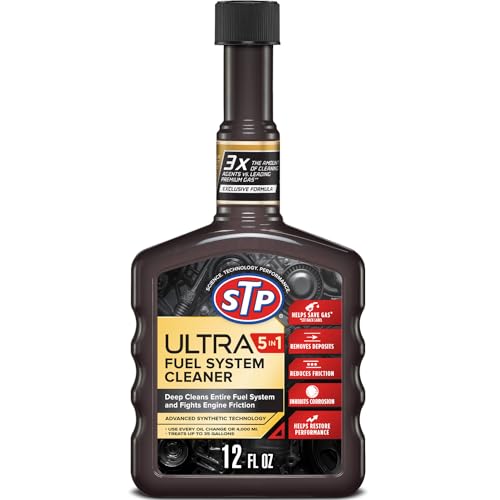
STP’s Ultra 5 In 1 cleaner is marketed as a robust fuel system treatment that deep-cleans the entire fuel path. Its formula incorporates a blend of PEA and PIBA detergents, designed to remove harmful deposits and reduce engine friction. The product claims a higher concentration of cleaning agents compared with some premium gasoline cleaners, which can translate into stronger deposit removal in a single treatment. It targets multiple facets of the fuel system, including injectors and intake paths, to support smoother idle, better acceleration, and improved fuel economy over time. The 12-ounce bottle is a common size for quick maintenance cycles.
For vehicle owners facing symptoms like rough idle or occasional misfires, STP Ultra 5 In 1 offers a practical option to address buildup that can hinder performance. The formula’s detergency is intended to sustain cleaner combustion and more consistent fuel delivery, which can contribute to steadier performance, especially in engines with higher mileage or ethanol exposure. While results can vary with engine design, this product aligns with the goal of restoring efficiency and reducing friction-related wear during normal driving.
Red Line SI-1 Complete Fuel System Cleaner

Red Line’s SI-1 Complete Fuel System Cleaner is positioned as an advanced solution designed to clean and prevent corrosion across the fuel system. The product highlights include cleaning injectors, carburetors, valves, and combustion chamber deposits with a blend of high-temperature and low-temperature detergents. The focus on both cleaning and protection aims to support efficient fuel burning and reduce gum and varnish buildup that can impair performance. This cleaner can be particularly appealing for vehicles subjected to varying driving conditions, including stop-and-go city use and longer highway runs, where deposit control is essential for stable fuel economy and power output.
Users seeking a performance-oriented option may appreciate SI-1’s emphasis on both cleaning and preventing corrosion. The formula’s dual-detergent approach is designed to address deposits at multiple engine zones, working to maintain clean fuel passageways and combustion efficiency. For those dealing with aging vehicles or engines running on ethanol-blended fuels, this product offers a comprehensive path to preserving power and smooth operation while reducing the risk of deposit-related power losses.
Chevron Techron Concentrate Plus

Chevron Techron Concentrate Plus is a well-known fuel system cleaner with a broad reputation for addressing common gasoline engine issues. The product is described as reducing rough idle, engine surge, hesitation, and spark plug fouling, making it a practical choice for drivers who notice inconsistent performance or misfires. The 20-ounce bottle size supports mid-to-large vehicles and offers a substantial maintenance option that can be used to refresh the fuel system and restore responsiveness. Techron’s formulation emphasizes cleaning power across the intake and combustion pathways, contributing to improved combustion efficiency and smoother engine operation.
In terms of long-term value, Techron Concentrate Plus provides a balance between robust cleaning action and ease of use. The cleaner is intended to work with a wide range of gasoline engines, helping to maintain fuel delivery and reduce fuel system deposits that tend to accumulate with ethanol-rich fuels. For owners seeking a trusted brand with a track record of deposit reduction and performance restoration, this product remains a reliable option for periodic maintenance sessions.
Chevron Techron High Mileage Fuel System Cleaner

Chevron Techron High Mileage Fuel System Cleaner is targeted at older or higher-mileage engines seeking a restoration of power and efficiency. The product markets its ability to remove gum and varnish deposits that accumulate over time, with the promise of restoring lost power and performance. It also emphasizes maximizing fuel economy by keeping the engine clean and protecting fuel system components. In addition, Techron High Mileage notes corrosion-inhibitor benefits to guard metal parts such as fuel rails and sensors from corrosion, an important consideration for aging systems that may experience greater susceptibility to deposits and mineral buildup.
Owners of older vehicles or engines that have accumulated noticeable deposits may find this option particularly appealing. The focus on deposit removal, efficiency gains, and corrosion protection aligns with a maintenance strategy that aims to extend engine life and performance without resorting to extensive repairs. As with any cleaner, results depend on the current condition of the fuel system and the driving patterns of the vehicle—regular use over time tends to deliver the best outcomes.
Buying Guide
Choosing the right fuel system cleaner depends on engine type, current condition, and driving habits. Below are key factors to consider when selecting a product and how to compare popular options:
- Engine compatibility: Most cleaners target gasoline engines, including direct-injection and carbureted systems. If you drive a high-mileage or ethanol-blended vehicle, look for formulas that explicitly address ethanol-related deposits and corrosion inhibitors.
- Detergent chemistry: Detergent types vary by product. Polyaromatic cleaners using PEA (polyetheramine) or PIBA (polyisobutylene amine) detergents are common. Some formulas emphasize high- and low-temperature detergents to tackle deposits in different engine zones.
- Deposit target areas: Cleaners plan to address injectors, intake valves, carburetors, and combustion chambers. Consider your vehicle’s needs: modern GDI engines may benefit from cleaners that specifically clean injectors and intake pathways, while older engines may require broader deposit control.
- Size and dosing cycle: Bottle size affects how many maintenance sessions you can perform. Larger bottles are convenient for regular use on multiple vehicles or one vehicle with frequent driving. Check whether the product is intended for a single-treatment boost or ongoing maintenance.
- Fuel stabilization vs. cleaning: Some formulas emphasize stabilizing fuel to protect against moisture and ethanol, while others focus more aggressively on deposit removal. If your fuel supply is inconsistent, stabilization-focused products can be beneficial.
- Performance impact: Look for claims about idle smoothness, throttle response, and fuel economy. Real-world results vary, but products with strong cleaning capabilities tend to deliver more noticeable improvements for older engines or those with a history of deposit buildup.
- Warranty considerations: Most cleaners are safe for use with modern catalysts and sensors, but it’s wise to verify compatibility with your vehicle’s warranty terms. When in doubt, consult your manufacturer’s guidelines or a trusted mechanic.
- Maintenance integration: Use fuel-system cleaners as part of a broader maintenance plan, including regular oil changes, air filter replacements, and spark plug checks. A clean fuel system complements these efforts for consistent performance.
In practice, the five highlighted products cover a spectrum of needs—from immediate performance restoration to ongoing maintenance and high-mileage protection. For drivers seeking broad compatibility and proven performance, established brands with long track records—such as Techron, STP, Gumout, and Red Line—offer dependable options. For vehicles showing signs of deposit accumulation or aging components, a combination of a strong cleaning action and corrosion protection can help extend engine life while maintaining efficiency. Always follow label directions and consider a test run to gauge improvements after the first treatment.