Traveling in a camper van demands reliable climate control that works off-grid or from standard shore power. The following five units are among the strongest options for cooling—and in some cases heating—that suit compact living spaces. Each pick balances BTU capacity, power needs, and installation practicality to help you stay comfortable on outdoor adventures without sacrificing battery life or roof integrity.
Use the quick-reference table below to compare core specs at a glance, then dive into detailed sections for each model. The table highlights how these units differ in BTU, roof type, and power source to help you choose the right fit for your van’s size and power setup.
| Product | BTU | Type | Power |
|---|---|---|---|
| OutEquip 10,000 BTU Rooftop RV AC | 10,000 | Rooftop | 12V DC |
| VEVOR 13,500 BTU Non-Ducted Rooftop RV AC | 13,500 | Rooftop | 120V AC |
| Ivation 6,500 BTU Camper AC | 6,500 | Window/Sill | 115V AC (via window unit) |
| OutEquip 11,500 BTU 12V RV AC With Heat Pump | 11,500 | Rooftop | 12V DC |
| Jrswin 12,000 BTU 12V RV AC | 12,000 | Rooftop | 12V DC |
OutEquip 10,000 BTU Rooftop RV AC

This 10,000 BTU rooftop unit delivers rapid cooling, making it suitable for small to mid-sized camper vans. It operates on 12V DC, aligning with battery-powered or solar setups typical in off-grid travel. A built-in 4,500 BTU heater offers supplementary warmth for mild seasons, though it should not be used as a primary heat source in very cold conditions. The unit is designed with UV-stabilized ABS, an EPDM gasket, and a zinc-coated condenser to withstand harsh weather and rugged travel.
The low-profile design helps it fit standard van roofs without adding excessive height, and it’s engineered for durable operation in outdoor conditions. Given its rooftop installation, ensure your roof cutout and mounting hardware match the unit’s specifications, and plan for adequate clearance around vents and antennae. This model is a practical choice where off-grid cooling is a priority alongside modest heating needs.
VEVOR 13,500 BTU Non-Ducted Rooftop RV AC

This high-capacity non-ducted rooftop unit delivers efficient cooling for larger RVs or camper van interiors, capable of cooling spaces up to about 107.6 square feet with a robust 13,500 BTU compressor. It operates with R32 refrigerant and a 3956W power output, enabling quick comfort within minutes of activation. The unit provides three modes—Auto, Cooling, and a three-speed fan—and includes a timer function to fine-tune operation. The simple control panel makes on-the-fly adjustments straightforward for users during travel.
Installation is designed to be straightforward with a ductless design and an optimized air distribution box. It fits standard rooftop vents measuring 14.25 by 14.25 inches, which keeps roof mounting manageable for many van builds. Note that this model is not compatible with ducted RV systems, so plan for a non-ducted installation and ensure your vehicle’s roof structure can support the unit’s weight and mounting requirements.
Ivation 6,500 BTU Camper AC
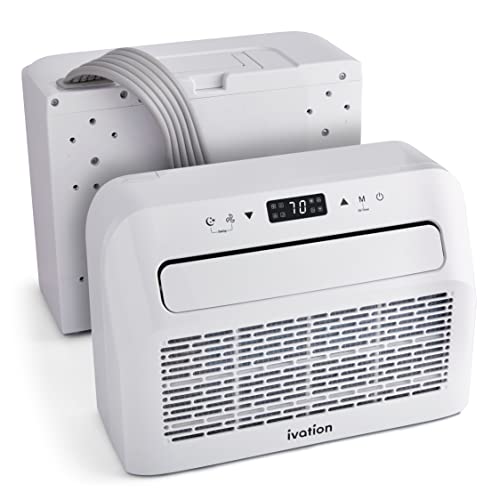
The Ivation 6,500 BTU unit is designed as a window-sill style option, offering a compact cooling and dehumidifying solution for smaller camper interiors. It combines climate control with a dehumidifier function and a fan in a single system, helping maintain a dry, comfortable space. The unit’s “Over the Sill” installation preserves window functionality and natural light while reducing noise via dampers that minimize vibration. A digital display provides easy temperature, timer, and mode adjustments for precise comfort control.
Advantages include quieter operation and flexible placement, making it well-suited for compact vans where roof installation is not feasible. While not a rooftop unit, its portability and window-friendly design let travelers optimize cabin layout. Consider your van’s window dimensions and electrical capacity, and verify that a window-style installation meets your local vehicle regulations before purchase.
OutEquip 11,500 BTU 12V RV AC With Heat Pump

This 11,500 BTU rooftop unit is designed for 12V direct power, enabling operation without an inverter in many off-grid configurations. The integrated heat pump adds heating capability to extend comfort into cooler evenings or shoulder seasons, enhancing versatility for van dwellers who travel year-round. Energy-conscious designs focus on efficient cooling and heating while keeping noise levels relatively low for comfortable living spaces on the road.
Notable for solar-friendly setups, this model emphasizes direct 12V operation and a straightforward installation. When planning, assess your battery capacity and solar array to ensure the system can sustain cooling and heating during extended off-grid periods. As with other rooftop units, confirm roof cutout size, mounting hardware compatibility, and weight support on your van’s roof structure.
Jrswin 12,000 BTU 12V RV AC
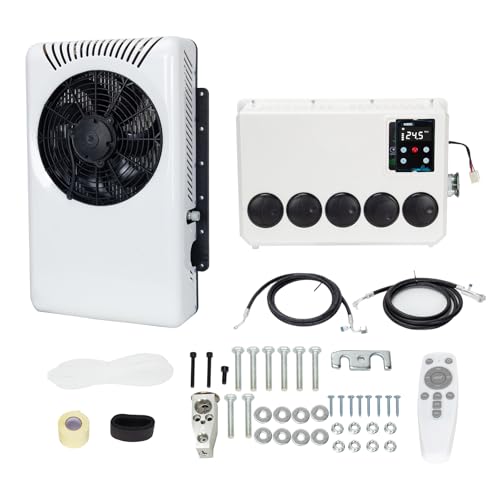
The Jrswin 12,000 BTU rooftop AC is tuned for robust cooling in medium-to-large van spaces, delivering strong performance from a 12V DC system. It emphasizes quiet operation, with interior noise levels around 45 dB during cooling. The unit also includes multi-layer circuit protection to guard against surges and mechanical stresses, supporting durability on bumpy roads. For travelers who rely on battery power or solar, the 12V design helps facilitate off-grid use when wind, sun, and battery capacity align with cooling needs.
When planning installation, review roof dimensions, mounting hardware, and the electrical draw to ensure your battery bank can sustain prolonged cooling or cooling plus heating. The unit’s power requirements may necessitate a robust charging setup, especially on days with limited sun. Proper ventilation and regular maintenance will help maintain peak efficiency and extend the unit’s lifespan in challenging travel environments.
Buying Guide
Choosing the right AC for a camper van hinges on space, power availability, and how you plan to use your vehicle. Start by sizing the BTU to match your van’s interior volume. Vans with small living areas typically succeed with 6,000–10,000 BTU units, while larger layouts may benefit from 11,500–13,500 BTU or higher, particularly in hot climates. For off-grid use, 12V DC rooftop systems or 12V/heating-capable units pair well with battery banks and solar setups, but they demand careful energy planning and robust electrical wiring.
Installation style matters. Rooftop units save interior space and maintain a sleek cabin, but require roof modifications, mounting hardware, and weatherproof sealing. Window or “over-the-sill” units avoid roof work but may reduce window function and add interior clutter. If you expect significant midday heat, prioritize higher BTU and consider units with efficient airflow distribution and low noise ratings. Non-ducted designs simplify installation, yet you’ll need to plan for direct airflow patterns to avoid stagnant corners in the van interior.
Power and efficiency are key. 12V systems excel for truly off-grid camping when paired with sizable battery storage and solar charging. They typically draw more current, so assess your electrical capacity and charging days. 120V rooftop units deliver strong cooling when connected to shore power, but they require a reliable electrical source and potential inverter considerations for off-grid scenarios. Noise levels, maintenance needs, and warranty coverage should also factor into your decision, since reliability is essential for extended road trips.
Durability and weather resistance influence long-term performance. Look for UV-stabilized housings, corrosion-resistant condensers, and robust gaskets to withstand sun, heat, and rain. Compatibility with your van’s roof cutout size and weight limits is crucial to avoid structural issues. Finally, consider future flexibility—systems with heat pump capabilities or easy integration with solar power can extend the usable season and comfort of your camper, regardless of destination.