Battery desulfators and smart chargers help extend the life of lead-acid batteries by removing sulfate buildup and maintaining charge. The following five products are selected for reliability, user safety, temperature compensation, and desulfation capabilities. Each option supports 12V and/or 24V systems and handles various battery types, including AGM, GEL, SLA, and Flooded. Use this guide to compare features and pick the right solution for cars, trucks, motorcycles, boats, and more.
| Product | Brand | Key Benefit |
|---|---|---|
| YONHAN Battery Charger 10-Amp | YONHAN | All-in-one charger, maintainer, desulfator with temperature compensation |
| NOCO GENIUS10 | NOCO | High-power, compact design with precision charging and thermal sensing |
| TowerTop 2/10/25 Amp | TowerTop | Versatile current options, auto desulfation, engine start assist |
| NEXPEAK NC201 | NEXPEAK | 10-Amp quick charger with winter/holiday trickle mode and desulfation |
| NOCO GENIUS2 | NOCO | Compact, efficient 2A option with desulfator and temp compensation |
YONHAN 10-Amp All-In-One Charger and Desulfator
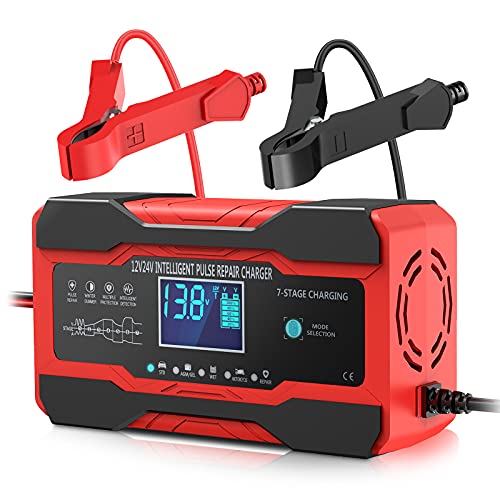
The YONHAN device combines charging, maintenance, trickle charging, and desulfation in a single unit. It supports 12V and 24V lead-acid batteries, including AGM, GEL, SLA, and Flooded types. A backlit LCD displays voltage, current, power percentage, and mode settings. Temperature compensation helps prevent overcharging in heat and undercharging in cold. It also features reverse polarity protection and short circuit protection for safer operation.
NOCO GENIUS1: 1A 6V/12V Smart Charger

NOCO GENIUS1 offers an all-in-one charging solution with 1A 6V/12V support and desulfation capabilities. It adapts to lead-acid and lithium batteries, including AGM, Gel, flooded, and LiFePO4. An integrated thermal sensor adjusts the charge with ambient temperature, helping prevent overcharging in hot conditions and undercharging during cold snaps. It is compact, making it ideal for small spaces or portable use while maintaining battery health.
TowerTop 12V Smart Charger with Auto Desulfator
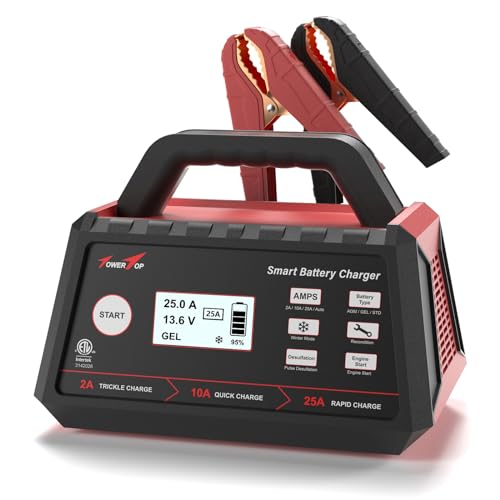
TowerTop offers 2/10/25 Amp settings in a fully automatic design with engine start capability and desulfation mode. It supports AGM, standard lead-acid, GEL, and deep-cycle batteries. The charger provides high efficiency with up to 85% charging efficiency and auto-recovery if voltage drops. It remembers last settings, ensuring consistent operation after power interruptions, and it includes safety features for long-term storage and maintenance.
NEXPEAK NC201 10-Amp Charger and Maintainer

NEXPEAK NC201 provides 10-Amp charging with 12V/24V operation and seven-stage maintenance. It supports lead-acid variants (AGM, GEL, SLA, Flooded) and includes temp compensation for reliable charging in different climates. It emphasizes protection features such as smart control and short-circuit protection while enabling a desulfation function to restore battery performance and extend cycle life. It also warns users about avoiding charging batteries that are deeply discharged.
NOCO GENIUS2: Compact 2A Smart Charger

GENIUS2 combines a compact 2A output with desulfation and temperature compensation, designed for 6V and 12V lead-acid and lithium batteries. It supports flooded, AGM, Gel, VRLA, and LiFePO4 varieties. The unit includes a force mode to recharge deeply discharged batteries and features an automatic maintainer function for long-term storage without overcharging. It is designed to be energy-efficient and space-saving for tight installations.
NOCO GENIUS5: 5A Smart Charger

GENIUS5 provides 5A charging with automatic maintenance and desulfation. It supports the same range of batteries as other NOCO models, including lead-acid variants and LiFePO4. The temperature sensor ensures appropriate charging across seasons, reducing risks of overcharging and undercharging. It is smaller than older models while delivering substantial charge and protection features for everyday use and long-term battery care.
Buying Guide: Desulfator and Battery Charger Considerations
When choosing a car battery charger desulfator, consider these factors:
- Battery compatibility: Verify 12V/24V compatibility and support for AGM, GEL, SLA, flooded, and LiFePO4 where needed. Some units are optimized for automotive use, others for marine or deep-cycle applications.
- Desulfation capability: Look for pulse desulfation or desulfation modes that actively break down lead sulfate crystals to reclaim capacity and extend battery life.
- Temperature compensation: A built-in thermometer or sensor helps adjust charging based on ambient temperature, protecting against overcharge in heat and undercharge in cold.
- Maintenance and trickle charging: For stored or seasonal vehicles, maintainers provide a safe long-term charging solution without harming the battery.
- Safety features: Reverse polarity protection, short-circuit protection, spark-free connections, and automatic shutoff are important for safe operation.
- Power output and charging speed: Higher amperage charges faster but may not suit all batteries. Consider a model with multiple current settings for flexibility.
- Memory and convenience: Some models remember the last mode or settings, simplifying use after power outages.
- Size and installation: Compact units fit tight spaces; consider wall-mount or portable options based on your setup.
- Price-to-value balance: While premium models offer more features, ensure they align with your anticipated usage and battery type.
For users with diverse fleets (cars, trucks, motorcycles, boats, lawn equipment), a multifunction charger with desulfation and temperature compensation offers the broadest protection and value. If space or budget is a constraint, a compact unit with essential desulfation and temperature compensation may suffice. Always follow the manufacturer’s instructions for optimum results and safety.