Choosing the right intake manifold for a Ford Windsor 302 small-block can optimize airflow, improve idle quality, and safely raise horsepower within your daily-driver. This guide highlights five top-rated aluminum dual- or single-plane manifolds designed for 260, 289, and 302W engines. Each product is evaluated on compatibility, design, and basic operating RPM range to help enthusiasts compare options quickly.
| Product | Brand | Engine Fit | Manifold Type |
|---|---|---|---|
| JGhyperX 7121 8124 Silver | JGhyperX | Ford 260/289/302W V8 | Dual Plane |
| A-Premium Aluminum Low Rise Dual Plane | A-Premium | Ford 260/289/302 V8 | Dual Plane |
| JGhyperX 7121 8124 Black | JGhyperX | Ford 260/289/302V8 | Dual Plane |
| Weonefit 84026 Aluminum Dual Plane | Weonefit | Ford Windsor 260/289/302 | Dual Plane |
| APFAITH Aluminum Dual Plane | APFAITH | Ford Small Block SBF 260/289/302 | Dual Plane |
JGhyperX 7121 8124 RPM Dual Plane Manifold Silver

This aluminum dual-plane intake is designed for Ford Windsor SBF engines from 1962 to 2001, covering 260, 289, and 302W V8 variants. It features a 4.750 inch manifold height and an idle-to-5,500 RPM operating range. The product notes indicate compatibility with standard carbureted setups and complete intake assembly, though it excludes heated-choke provisions and may not fit certain 255 c.i.d. or specific part variations. The model code is 8124/7121 with a DM-3212-N designation and Silver finish.
A-Premium Aluminum Low Rise Dual Plane Intake Manifold

Designed for Ford 289/302 V8 engines in a wide year span, this dual-plane manifold targets stock and mildly upgraded builds. It lists broad vehicle-fitment notes across several Ford lines, including Mustang and F-Series trucks from the 1960s through mid-1990s, making it a flexible option for classic restorations and street-driven builds. Fitment details emphasize coverage for Ford Bronco, LTD, Mustang (1991–1993), and Lincoln variants, paired with a standard carburetor setup and a mid-Idle to 5,500 RPM range.
JGhyperX 7121 8124 Black Dual Plane Manifold

This variant mirrors the silver dual-plane design with a black finish. It maintains the same compatibility with Ford Windsor SBFs from 1962 to 2001 and the 260/289/302W V8 range, with an idle-to-5,500 RPM operating band and the same 4.750 inch manifold height. It notes the absence of exhaust-heated choke provisions and mentions the same product codes as the silver variant, making it suitable for users who prefer a darker engine bay aesthetic without sacrificing performance fundamentals.
Weonefit 84026 Aluminum Dual Plane Intake Manifold
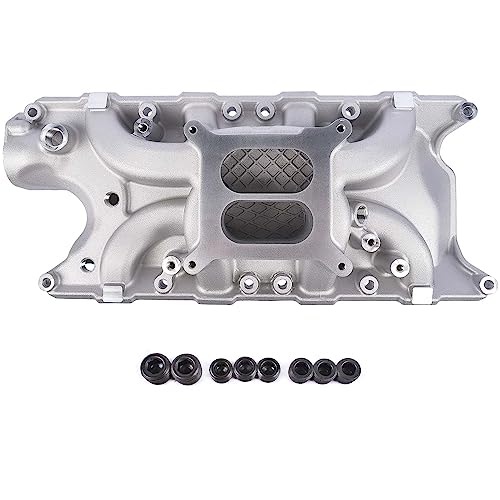
This Weonefit unit provides a replacement dual-plane manifold for Ford Small Block Windsor engines, covering 1962–1965 4.3L/260, 1963–1969 4.7L/289, and 1968–2001 5.0L/302 V8s. It specifies an aluminum construction with a 4.785 inch height and an idle range that extends to 6,000 RPM. The carburetor quantity is one, and it aligns with common aftermarket carb setups for classic Ford V8 builds, emphasizing a straightforward installation for stock or slightly upgraded powertrains.
APFAITH Aluminum Dual Plane Intake Manifold
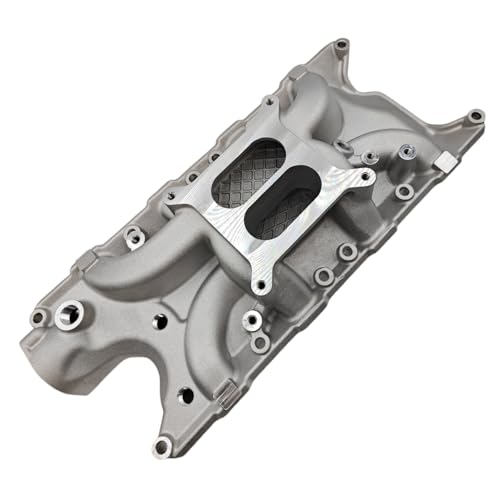
APFAITH offers a dual-plane aluminum intake designed for Ford Small Block Windsor family engines (SBF 260/289/302). The listing references multiple replacement part numbers including DM-3212, 8124, 7121, and 2121. The kit is described as a complete dual-plane manifold replacement, intended forIdle-6,500 RPM operation. This option emphasizes compatibility with a broad set of part numbers, simplifying fitment decisions for builders who may encounter varied stock inventory during restoration or upgrades.
Ford Racing M9424M50BR 302R Intake Manifold

The Ford Racing 302R intake manifold is positioned as a performance-oriented option for the Ford 302 crate, with a focus on optimized airflow characteristics for racing and high-performance street builds. The product listing is concise with a “PVP” note, indicating constraint or placeholder content. While it’s a branded performance part, the listing’s detail level is lighter compared to other aftermarket entries, suggesting its primary audience is enthusiasts pursuing a Ford-branded upgrade with potential compatibility considerations for non-stock configurations.
JGhyperX 7521 54026 Air Gap Dual Plane

This JGhyperX air-gap dual-plane manifold expands above the intake plenum to improve air separation from heat sources and potentially shift power characteristics toward low- to mid-range torque. It’s listed for Ford Windsor SBs 260/289/302 1962–2001, compatible with 4.3L and 4.7L variants as well, with a 1,500–6,500 RPM operating window and a 4.900 inch height. The kit is described as complete and designed for carbureted setups, offering a distinct air-gap approach compared to standard dual-plane designs.
JGhyperX 54031 Air Gap Single Plane

This single-plane, air-gap intake targets higher-RPM performance for Ford Windsor small-blocks, with a documented operating range of 3,500–8,000 RPM. The manifold height is 5.390 inches, and it is designed for carbureted engines, offering a distinct tuning path for enthusiasts seeking top-end power. It covers 1962–2001 SBF engines in 221, 260, 289, and 302 configurations, making it a viable option for performance-oriented builds that prioritize peak horsepower at higher RPMs.
Buying Guide: Key Purchase Considerations
- Engine compatibility: Confirm that the manifold is designed for Ford Windsor small-blocks (260, 289, 302) and the specific deck height and carburetor setup of your build.
- Dual plane vs. single plane: Dual-plane manifolds typically provide stronger low- and mid-range torque and are better for street-ported or daily drivers. Single-plane manifolds excel at high-RPM power and race-oriented applications.
- Air temperature and heat soak: Air-gap designs can reduce heat soak but may require careful clearance in tight engine bays; ensure fitment with your hood clearance and accessory layout.
- RPM range: Match the stated operating RPM range with your intended use. A street motor may benefit from a lower idle-to-mid RPM range, while a race setup might target higher RPM thresholds.
- Finish and material: Aluminum manifolds offer lighter weight and good heat dissipation. Finishes (silver, black) can impact aesthetics and corrosion resistance in harsher environments.
- Fitment notes: Some listings include caveats about not fitting certain V8 displacements or variants. Verify exact engine displacement and vehicle year range to avoid incompatibilities.
- Replacement versus OEM-style: Aftermarket manifolds may provide better flow but require tuning and carburetor calibration to maximize performance and reliability.
These considerations help balance price, performance goals, and installation practicality. For builders focusing on classic Ford restorations, a dual-plane aluminum manifold that aligns with stock carburetors and standard deck heights often presents the most straightforward upgrade path, while air-gap designs can unlock higher end power for performance-oriented builds.